What is predictive maintenance? Benefits, how it works and examples for fleet management
Predictive maintenance uses real-time data to catch vehicle warning signs early so fleet managers can plan the fix before it costs them a truck, delivery window or a driver.

By Geotab Team
Oct 8, 2026

Key Insights
- Predictive maintenance (PdM) uses vehicle data and analytics to identify signs of potential failures so fleet managers can address issues before they lead to breakdowns.
- PdM can help reduce maintenance costs and boost vehicle uptime.
- While preventative maintenance can lead to unnecessary maintenance if the asset does not need repair, PdM only focuses on assets that require attention.
- Predictive maintenance complements preventive and reactive maintenance instead of replacing them.
An unexpected breakdown can pull a truck off the road for days and turn a routine repair into a costly, unplanned expense. Predictive maintenance (PdM) uses data-backed insights to help fleet managers anticipate and address fleet maintenance needs before they turn into a problem.
Predictive management is the key to avoiding breakdowns and expensive repairs. By capturing and utilizing the right vehicle data, you can optimize maintenance schedules, reduce downtime and improve overall fleet performance. This article explains what predictive maintenance is, how it works and common use cases across fleet types.
What is predictive maintenance?
Predictive maintenance uses vehicle health and usage data to predict patterns that can signal potential equipment failure, allowing fleet managers to address issues before they result in costly breakdowns. It builds on condition-based maintenance, using an asset's actual health data to determine service is needed. This reduces unplanned downtime.
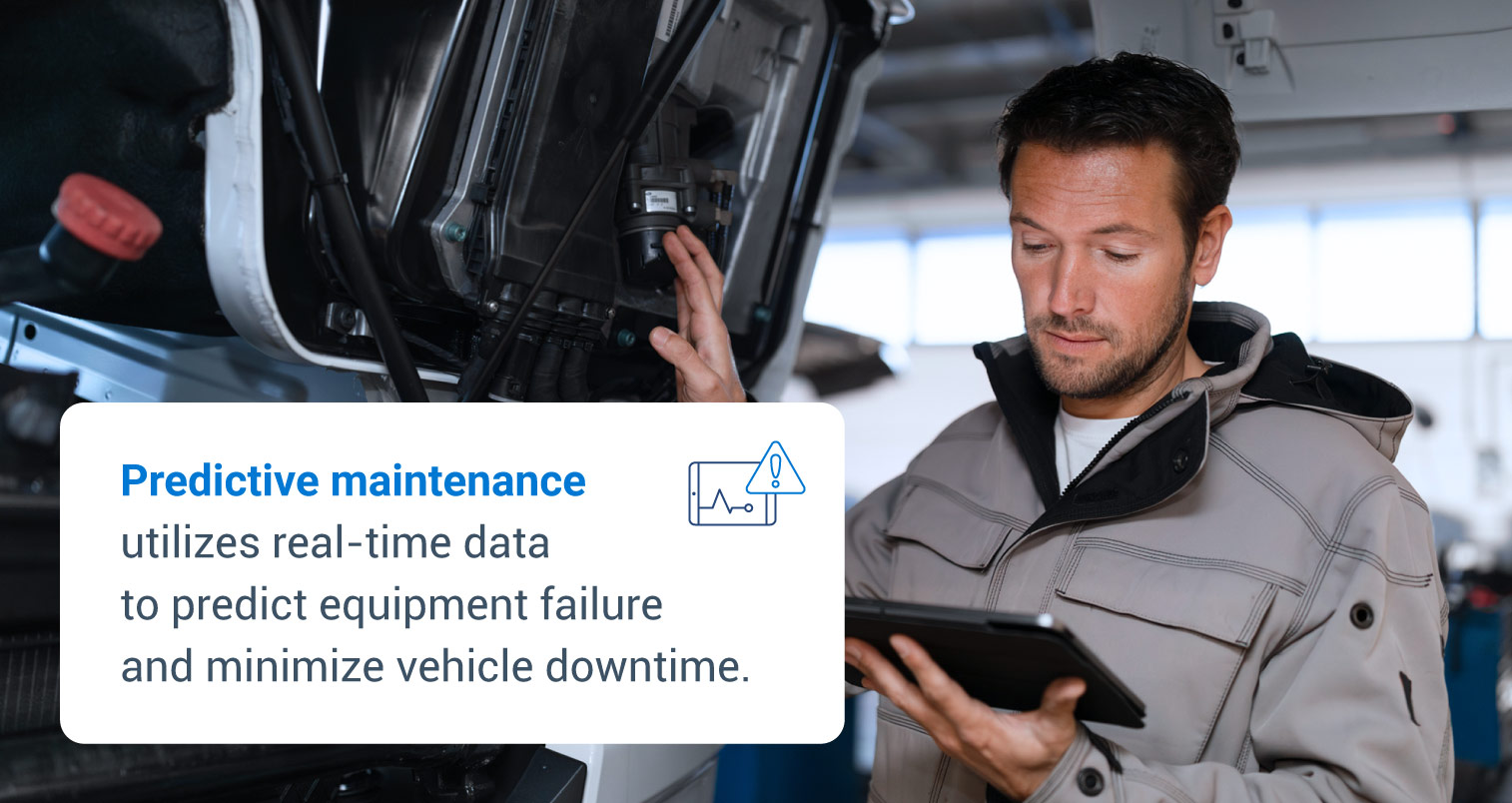
Predictive fleet maintenance solutions use data from IoT sensors, vehicle systems and driver activity to identify patterns associated with past failures. Machine learning (ML) analyzes this information across assets and can alert fleet managers when data indicates a potential issue. This allows them to schedule maintenance before it becomes more serious.
Predictive maintenance vs. preventive maintenance vs. reactive maintenance
To understand where predictive maintenance fits into a broader maintenance strategy, consider the three primary maintenance approaches:
| Maintenance type | When maintenance occurs | Example |
| Reactive maintenance | After a failure or breakdown | A truck's alternator fails on the road, forcing an emergency repair. Because the repair is unplanned, the vehicle may be out of service until the issue is resolved. |
| Preventive maintenance | On a fixed schedule, regardless of condition | A technician changes the oil every 10,000 miles, even if a vehicle does not need it yet. This approach can reduce unexpected failures but can result in unnecessary fleet costs. |
| Predictive maintenance | When data shows early signs of wear or failure | Rising engine coolant temperature triggers a work order before the cooling system fails, allowing the fleet to address the issue before a breakdown occurs. |
How does predictive maintenance work?
Predictive maintenance uses real-time data to predict when a vehicle needs to be repaired. It can incorporate work order history, but the analysis also considers information such as sensor readings, fault codes, mileage and operating conditions.
It is a complementary approach to usage-based maintenance and preventive maintenance that helps fleets avoid costs between cycles.
Predictive maintenance generally works by moving through four stages, from collecting raw vehicle data to automatically generating a work order.
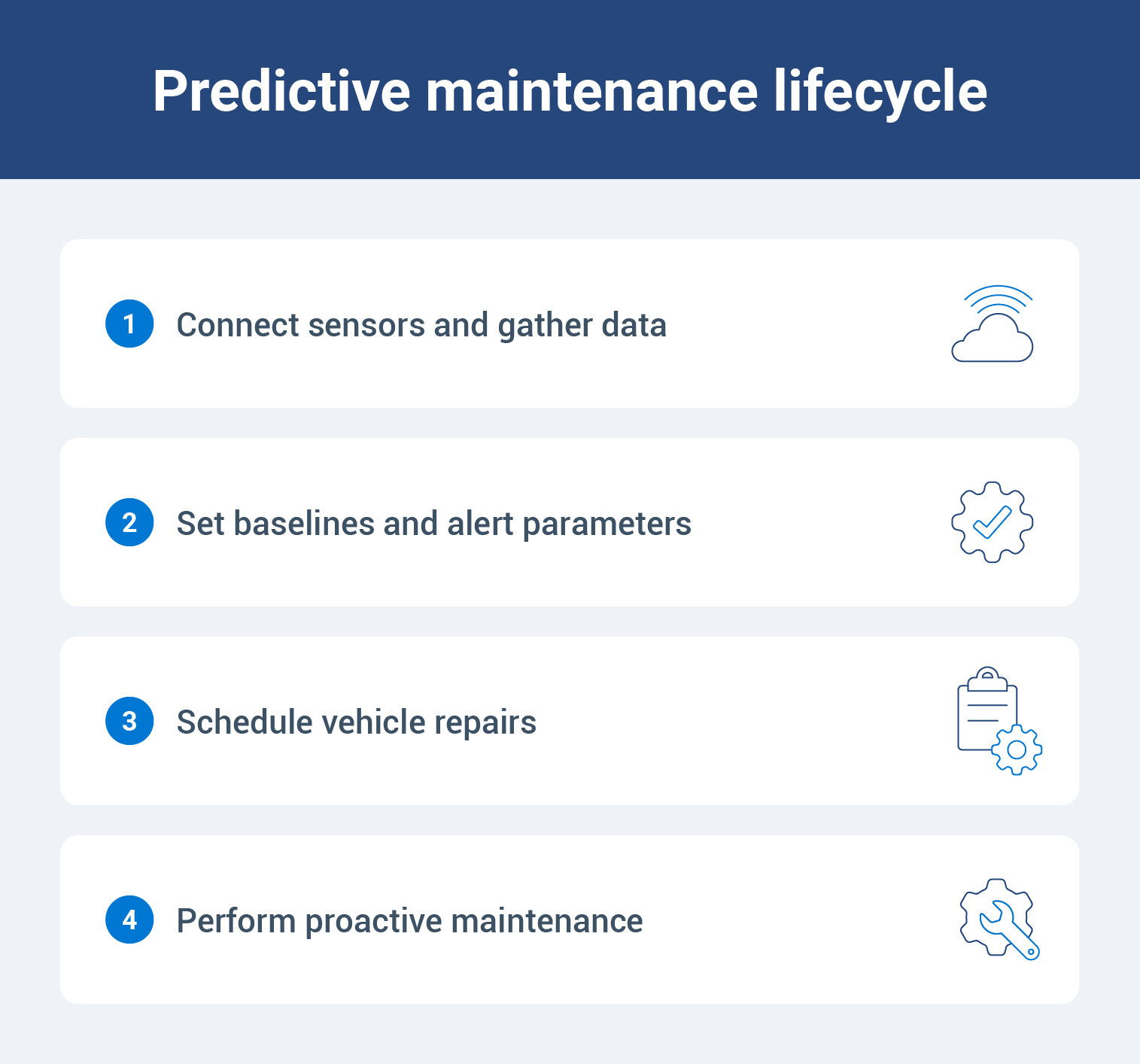
Data collection
IoT sensors and telematics devices installed on a vehicle capture real-time data like:
- Engine temperature
- Oil pressure
- Battery voltage
- Driver behavior logs
- Fuel consumption records
- Historical maintenance data
Telematics devices can provide many of the vehicle data points predictive maintenance uses, including diagnostics information, operating conditions and vehicle usage.
Baseline determination
Predictive maintenance for vehicles depends on establishing an accurate baseline before a system can flag meaningful deviations. Baselines vary by vehicle type, age, usage pattern and operating environment, so a delivery van and dump truck will have different healthy ranges for the same metric.
Predictive maintenance software will set a normal operating range for each asset, then watch for changes that take place outside of that range, sending alerts for spikes or dips.
Data analysis
Machine learning algorithms compare incoming sensor data against each vehicle's baseline to identify patterns associated with wear or impending failure.
For example, a predictive maintenance automobile program can detect a gradual rise in engine coolant temperature over several weeks and signal a cooling system issue long before it causes a full engine overhaul.
The output that matters more to a fleet manager is not the algorithm itself, but the alert or risk score it generates. Many of these systems are part of a broader AI fleet management strategy that extends well beyond maintenance predictions.
Maintenance scheduling and task automation
When the system detects a meaningful anomaly, it can trigger an alert or automatically generate a work order. This shortens the time between detection and repair and reduces the administrative burden on maintenance staff.
Automating this step is one of the more direct ways fleets can reduce maintenance costs with telematics, since technicians can spend less time on manual tracking and more time on the repairs that matter.
Benefits of predictive maintenance in fleet management
Predictive maintenance can affect several areas of fleet operations, from unplanned downtime to improving an organization's entire maintenance program. These potential benefits include:
Fewer unplanned breakdowns
Unplanned breakdowns disrupt delivery schedules and put drivers at risk on the road. Predictive maintenance identifies potential issues, like a failing battery or worn brake components, before they leave a vehicle stranded.
Catching these issues early supports broader fleet risk management, since a vehicle pulled from service is far less likely to cause a breakdown-related collision.
Lower maintenance costs
Predictive maintenance helps fleets avoid emergency repairs and unnecessary preventive work performed on healthy vehicles. By servicing a component only when data shows it needs attention, fleets can reduce labor and parts spend without sacrificing reliability.
More vehicle uptime
A vehicle that is not running is not generating revenue. Predictive alerts let fleet managers schedule repairs around a route rather than around a breakdown, keeping more vehicles available for dispatch on any given day. Over time, this translates directly into higher fleet productivity.
Increases vehicle lifespan
Predictive maintenance extends the life of your vehicles by identifying and addressing potential issues before they escalate into major breakdowns.
By detecting wear and tear early on, you can schedule repairs and replacements proactively, preventing catastrophic failures that can shorten a vehicle's life span. Allocating resources to predictive maintenance is a strategic move that enhances your fleet's durability and maximizes your overall return on investment.
Stronger return on investment
The ROI case for predictive maintenance combines lower repair costs, fewer breakdowns and longer asset life into a single, measurable return. These predictive maintenance benefits compound as more vehicle data accumulates and baselines become more accurate over time.
The fleet should prepare for upfront investments in sensors, software and training. The payback period depends heavily on fleet size and how consistently the data is used. Fleets evaluating this technology should build a business case around their own vehicle mix and not just rely on industry-wide averages for more accurate numbers.

Predictive maintenance challenges
Predictive maintenance programs require reliable data, trained staff and a clear process for responding to alerts. Without those fundamentals, even a well-designed predictive maintenance fleet management program can fall short. The top challenges when putting a predictive maintenance process in place include:
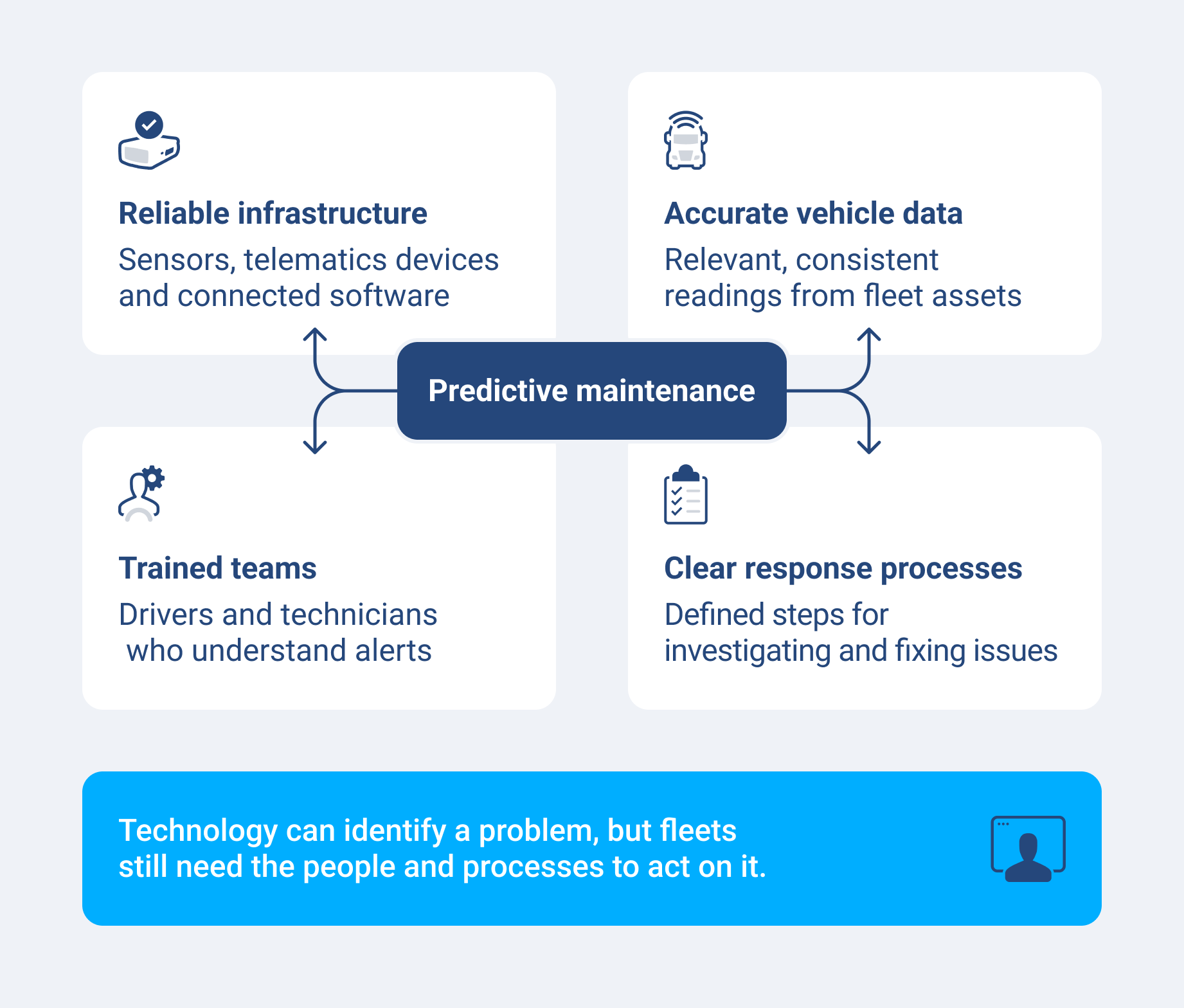
Implementing system infrastructure
You need the right tools to implement a predictive maintenance program, which means researching and purchasing necessary equipment and technology.
For example, if reducing vehicle downtime is important to your fleet, you’ll need a tool that provides real-time insights to integrate with your fleet maintenance checklist.
Distributing training and resources
Ensuring that fleet drivers and technicians can effectively monitor and respond to maintenance alerts is crucial for the success of your predictive maintenance program. You’ll likely need training around interpreting, troubleshooting and reporting maintenance alerts.
Capturing the right data
Choosing fleet maintenance software often hinges on its data-capturing capabilities. With so many metrics available, determining the most valuable data can be challenging. Fuel consumption, maintenance schedules and compliance data are some crucial data points to track.
Knowing when to use predictivenalytics
Predictive maintenance is often preferred to preventative maintenance, but there is a time and place for each. While predictive maintenance offers data-driven insights for more accurate predictions, it's important to consider your fleet’s specific needs.
Based on fixed intervals, preventive maintenance can be effective for certain assets or when predictive analytics infrastructure costs are prohibitive.
Increases driver retention
A safe vehicle is a well-maintained vehicle, and a well-maintained vehicle is a reliable one. These truths not only save money for the carrier but also provide the right environment for driver retention.
No driver likes breakdowns — the time, the hassle and the loss of income if paid per mile. A poorly maintained fleet will be at a significant disadvantage when retaining drivers and acquiring new ones.
Predictive maintenance examples and use cases
Implementing a predictive maintenance program sounds promising, but how will this look when implemented? Here are some common use cases and examples of predictive maintenance.
Transportation and logistics
In the fleet transportation and logistics sector, predictive maintenance is essential for maintaining fleet uptime and reducing operational costs. By monitoring vehicle sensors for signs of wear and tear, such as engine temperature, tire pressure and brake performance, fleet managers can proactively schedule maintenance, preventing unexpected breakdowns that disrupt delivery schedules and lead to customer dissatisfaction.
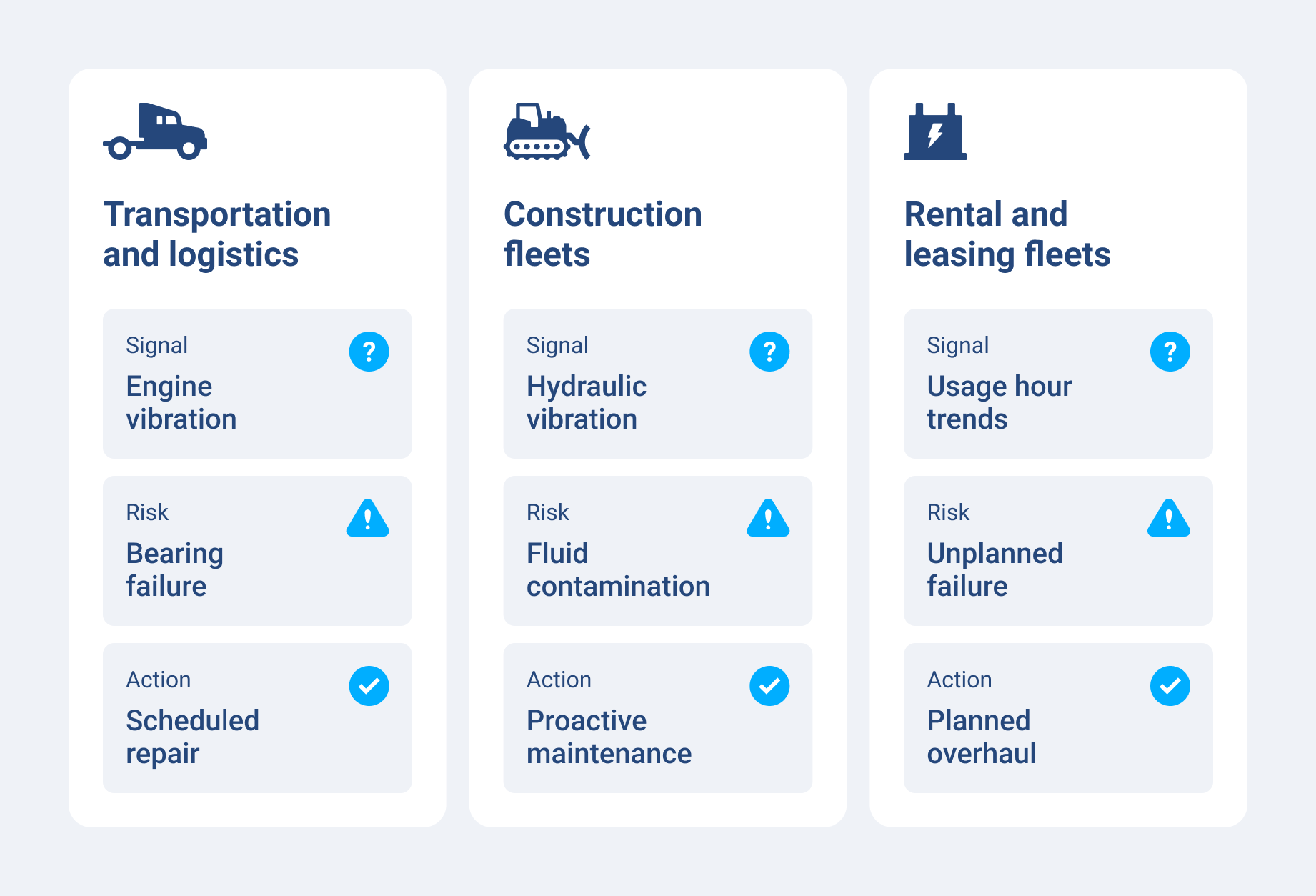
For example, a trucking company can use predictive maintenance to analyze engine vibration data, identifying early signs of bearing failure. By scheduling preventive maintenance, the company can avoid a costly engine overhaul and ensure uninterrupted operations.
Construction fleets
Predictive maintenance is also crucial for fleet construction equipment, where downtime can significantly impact project timelines and budgets.
By monitoring sensors on different types of construction vehicles, such as excavators, bulldozers and cranes, construction companies can track equipment health, detect potential failures and schedule maintenance accordingly.
For example, a construction firm can use predictive maintenance to analyze vibration data from an excavator's hydraulic system, identifying early signs of fluid contamination or pump wear. By proactively addressing these issues, the company can help reduce costly equipment breakdowns and avoid project delays.
Rental and leasing fleets
Maximizing asset utilization and minimizing downtime is paramount in the rental and leasing industry. Predictive maintenance allows rental companies to optimize equipment maintenance schedules, ensuring that assets are available for customers when needed.
This both improves customer satisfaction and reduces the risk of costly emergency repairs and equipment replacements.
For example, a rental company can use predictive maintenance to analyze a generator's operating hours and maintenance history and predict when a major overhaul is needed. By scheduling the maintenance in advance, the company can ensure the generator is available for rent when customers need it.
Boost productivity with predictive maintenance technologies for fleet management
When looking to employ a data-driven approach to fleet management, predictive maintenance offers proactive insights to catch problems early and save time and money.
Fleet managers who implement predictive maintenance can anticipate equipment failure, minimize vehicle downtime and make more informed decisions.
Geotab's vehicle maintenance software provides the data to support these efforts and help teams prioritize issues. Request a demo to learn how it can fit into your fleet maintenance strategy.

Subscribe to get industry tips and insights
Frequently Asked Questions
The three most common types of predictive maintenance are vibration analysis, which detects imbalance or misalignment in moving parts, oil analysis, which checks for contamination and wear particles, and thermographic analysis, which uses infrared imaging to spot abnormal heat patterns before a component fails.
Preventive maintenance is scheduled upkeep based on time or usage, while predictive maintenance uses real-time data to predict when maintenance is needed. While preventive maintenance aims to extend asset life, predictive maintenance focuses on reducing unnecessary maintenance costs.
Predictive maintenance is important because it prevents unexpected equipment failures, reduces downtime and optimizes maintenance costs. Predicting when equipment needs repair allows for scheduled maintenance instead of emergency fixes, improving overall efficiency and reliability.
Predetermined maintenance is another term for preventive maintenance. It involves performing maintenance tasks at fixed intervals, based on time or usage, without considering the actual condition of the equipment.
The most common sensor types for predictive maintenance monitoring track engine temperature, oil pressure, battery voltage, vibration and tire pressure. Telematics devices combine data from many of these sensors with GPS and driver behavior data to build a complete picture of vehicle health.
The industries that benefit the most from predictive maintenance systems include transportation and logistics, construction, utilities, oil and gas, and rental and leasing. All see some amount of unplanned downtime that directly affects revenue, safety or contractual service levels.
The Geotab Team write about company news.
Table of Contents
Subscribe to get industry tips and insights
Related posts


Top seven best fleet fuel cards: How to choose the right one for your business?
October 1, 2026
7 minute read


Fleet maintenance software for small business: 8 top tools and guide
September 29, 2026
7 minute read